
Global public good provision in emergency states: A model of (asymmetric) yardstick competition between rent-seeking governments
Di Liddo G., Vinella A. (2024) – Socio-Economic Planning Sciences
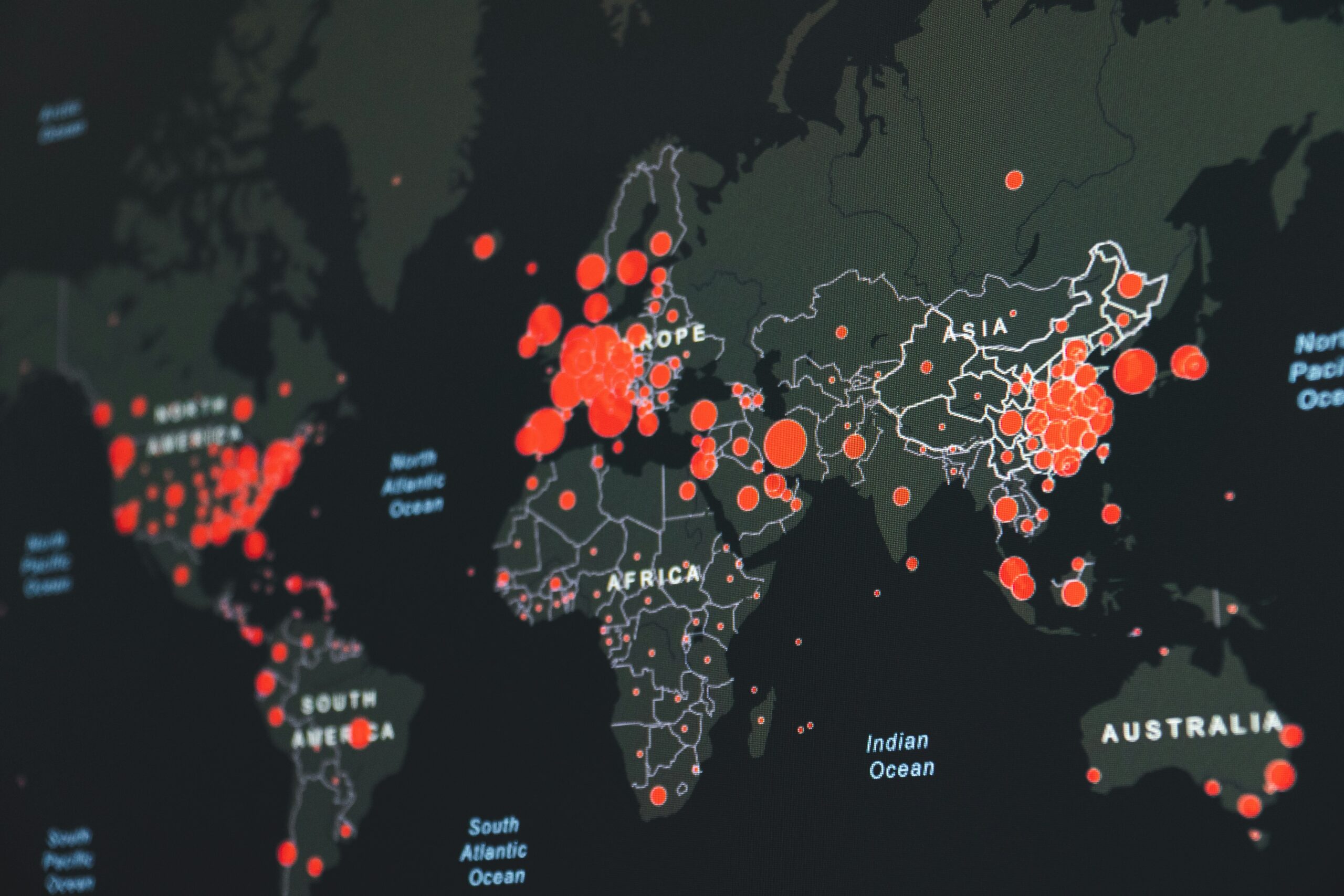
Global crises confront governments with a policy dilemma. When an effective response requires an innovative good, each country may contribute from the outset to its development, bearing the associated costs and risks, or wait and purchase the solution developed elsewhere. The Covid-19 pandemic made this choice visible: some governments financed research, technological adaptation and manufacturing capacity, while others relied more heavily on vaccines produced abroad.
In the article, “Global public good provision in emergency states: A model of (asymmetric) yardstick competition between rent-seeking governments”, recently published in Socio-Economic Planning Sciences, Giuseppe Di Liddo and Annalisa Vinella examine this dilemma from a political economy perspective. They consider two otherwise identical countries governed by politicians concerned exclusively with rent extraction. Incumbents choose public expenditure to increase their re-election prospects and maximise rents over two periods. Each government may finance the adaptation of an existing technology and production capacity or refrain from investing and procure the good internationally. Investment entails an immediate sacrifice of rent and may fail. If it succeeds, the government can purchase the good at a lower cost and, when the other country has not invested, appropriate a share of export revenues through its power to authorise or restrict foreign sales.
Political competition takes the form of yardstick competition, a mechanism studied mainly in the context of comparable local governments and less established at the national level. In the proposed framework, it becomes plausible during an international emergency, when global media attention makes cross-country differences salient. Voters do not observe crisis costs, strategic risks or extracted rents, but compare public services before the election. Current expenditure is therefore a political investment: it reduces present rent but raises the chance of a second term.
When both governments adopt the same strategy, they face the same costs, risks and revenues. The equilibrium is symmetric: service provision, re-election probabilities and rents coincide, so yardstick competition operates without bias. When strategies differ, the investor bears the initial cost and technological risk but may obtain procurement savings and export rents; the other government preserves current rent and may later purchase the foreign solution. Voters still compare only visible services. Re-election probabilities no longer track expected rents: yardstick competition becomes biased, creating an endogenous disparity.
The authors find that, when the investment cost is low, both governments invest; when it is very high, neither does. For intermediate costs, an asymmetric equilibrium may emerge if the probability of success and/or the benefits of innovation are sufficiently large. One government gives up rent today to obtain lower procurement costs and a share of export revenues tomorrow. The other avoids the initial outlay, maximises the rent it can appropriate before the election, and relies on the good developed through the other country’s investment eventually becoming available.
Counterintuitively, better technological prospects do not necessarily induce both governments to invest. If the other country is highly likely to develop the good, non-contribution may become more attractive: an opportunistic government avoids the upfront cost and later benefits from imports. Diversification is more likely when incumbents place greater weight on the future. This is not because the non-investor is less patient – both have the same discount factor – but because duplicating the other’s investment yields few additional gains and makes current rent extraction more attractive. The two strategies thus represent complementary forms of rent extraction.
The framework, developed during the pandemic, is not limited to health crises. Cyber resilience illustrates its broader reach. Estonia’s 2024-2030 strategy strengthens digital resilience, incident monitoring and national expertise ex ante. After the 2022 cyberattacks, Albania hosted a US Hunt Forward team for three months to identify hostile activity and vulnerabilities. This does not establish deliberate underinvestment, but it shows that a government under attack may draw on capabilities developed elsewhere. Since 2025, the EU Cybersecurity Reserve has institutionalised this possibility by making qualified response and recovery services available on request.
Antimicrobial resistance shows why the problem remains relevant to health policy even after Covid-19. Developing antibiotics is costly and uncertain, while prudent use limits sales and weakens market incentives. In 2022, NICE and NHS England introduced annual payments for two drugs based on clinical value rather than sales volumes; in 2024, the model was extended to all four UK nations. A 2025 study compares the support provided by G7 and EU countries for antibacterial innovation with the contribution each country would be expected to make in proportion to its economic capacity. The United Kingdom and Italy are close to their estimated shares, whereas most other countries contribute less. This does not demonstrate opportunistic waiting, but it highlights the possibility that some health systems may later obtain antibiotics whose availability was supported largely by incentives financed by other countries.
These two cases reinforce three implications of the model. Countries facing the same threat may adopt different strategies despite similar initial capacities; external assistance or foreign-financed innovation may weaken incentives to invest; and public comparisons may overlook ex ante costs, risks and benefits generated for other countries. These cases are not empirical tests of opportunistic behaviour; they show that relying on investments made elsewhere is a real option. The paper does not identify the socially optimal response. It explains, however, why global public-good provision may require supranational institutions that share preparedness costs, make national contributions visible, and reduce the attraction of waiting for others to invest.
Sources for the concrete cases
Estonia, Cybersecurity Strategy 2024-2030: Cyber-conscious Estonia.
European Commission, EU Cyber Solidarity Act; ENISA, EU Cybersecurity Reserve.
NICE, A new model for evaluating and purchasing antimicrobials in the UK.
The cases illustrate plausible applications of the mechanism; they are not empirical tests of opportunistic behaviour.